

 Escrito por Biraajmaan TamulyRedatorRevisado por Allen ScottEditor
O que impede o preço do Bitcoin de ultrapassar US$ 80 mil?
MercadosPublicado14 de mai. de 2026
O Bitcoin luta para recuperar força acima dos US$ 80 mil, enquanto alguns compradores seguem hesitantes e uma forte resistência se forma nos níveis superiores.
O Bitcoin (BTC) está enfrentando dificuldades para entrar em uma fase de rompimento mais forte acima dos US$ 80 mil, já que os fluxos de capital para o mercado de BTC seguem abaixo dos níveis vistos em ciclos anteriores de alta. Traders de futuros de BTC também continuam cautelosos, enquanto um número crescente de investidores que mantiveram posições nos últimos seis meses pode buscar vender em níveis importantes de resistência, segundo uma nova análise.
Fluxos de capital do Bitcoin seguem moderados, aponta a Glassnode
O relatório The Week On-chain, da Glassnode, afirmou que a variação líquida da capitalização realizada em 30 dias do Bitcoin subiu recentemente para US$ 2,8 bilhões por mês. A métrica acompanha a quantidade de novo capital entrando no mercado de BTC ao longo de 30 dias.
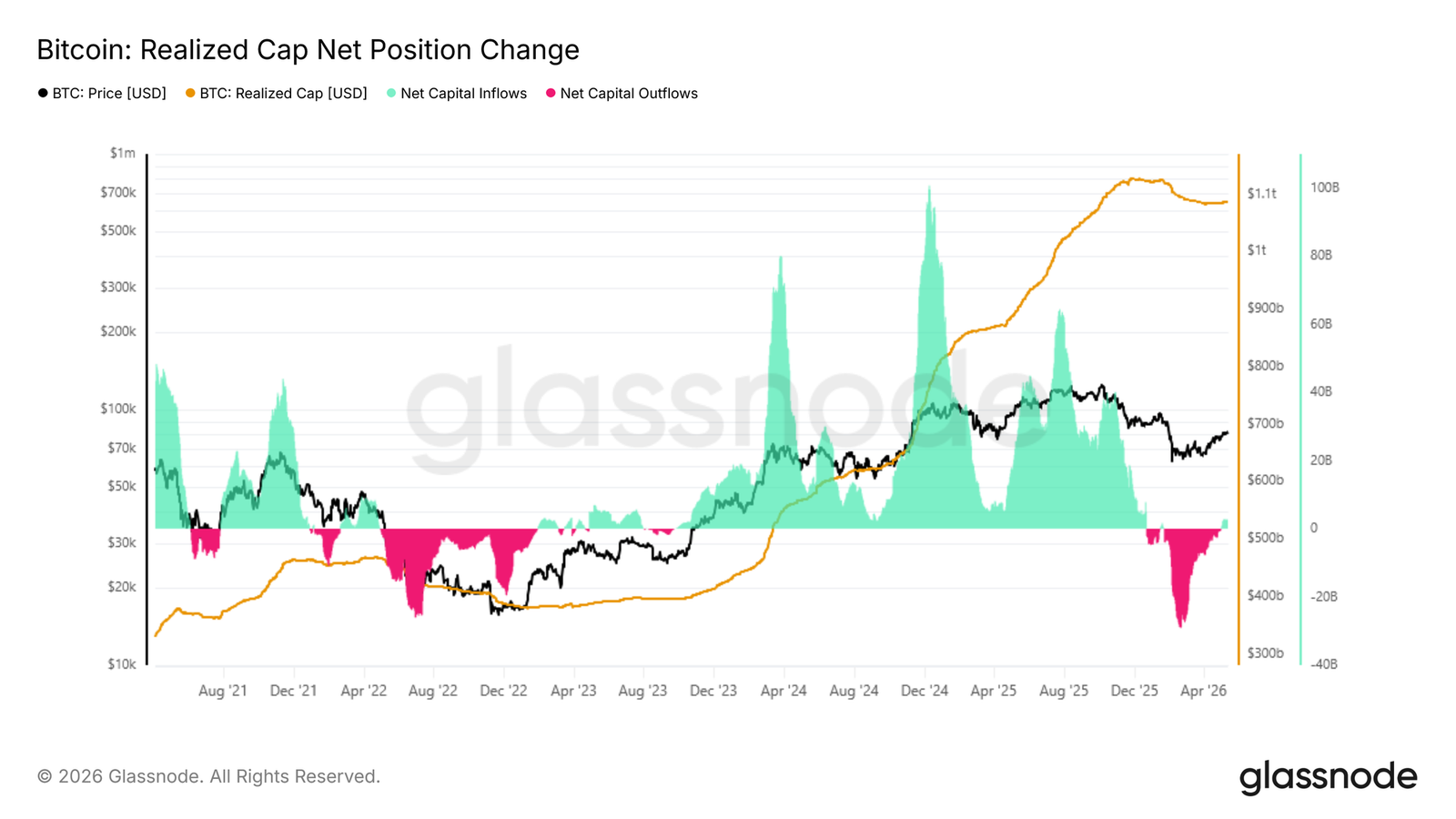
Bitcoin realized cap net position change. Source: Glassnode
The positive flows helped support the BTC recovery from April's lows near $65,000. But previous breakout phases during the 2023–2025 rally were accompanied by much bigger capital rotations. The slower pace of capital entering the market this year has raised doubts about whether Bitcoin can rally above the $80,000–$82,000 range.
Glassnode also flagged a growing cluster of holders near the $86,900 level. These investors accumulated BTC during the November-to-February period and are now approaching breakeven. These holders could sell near their entry price after extended drawdowns, creating a large overhead supply zone that may stall Bitcoin’s rally.
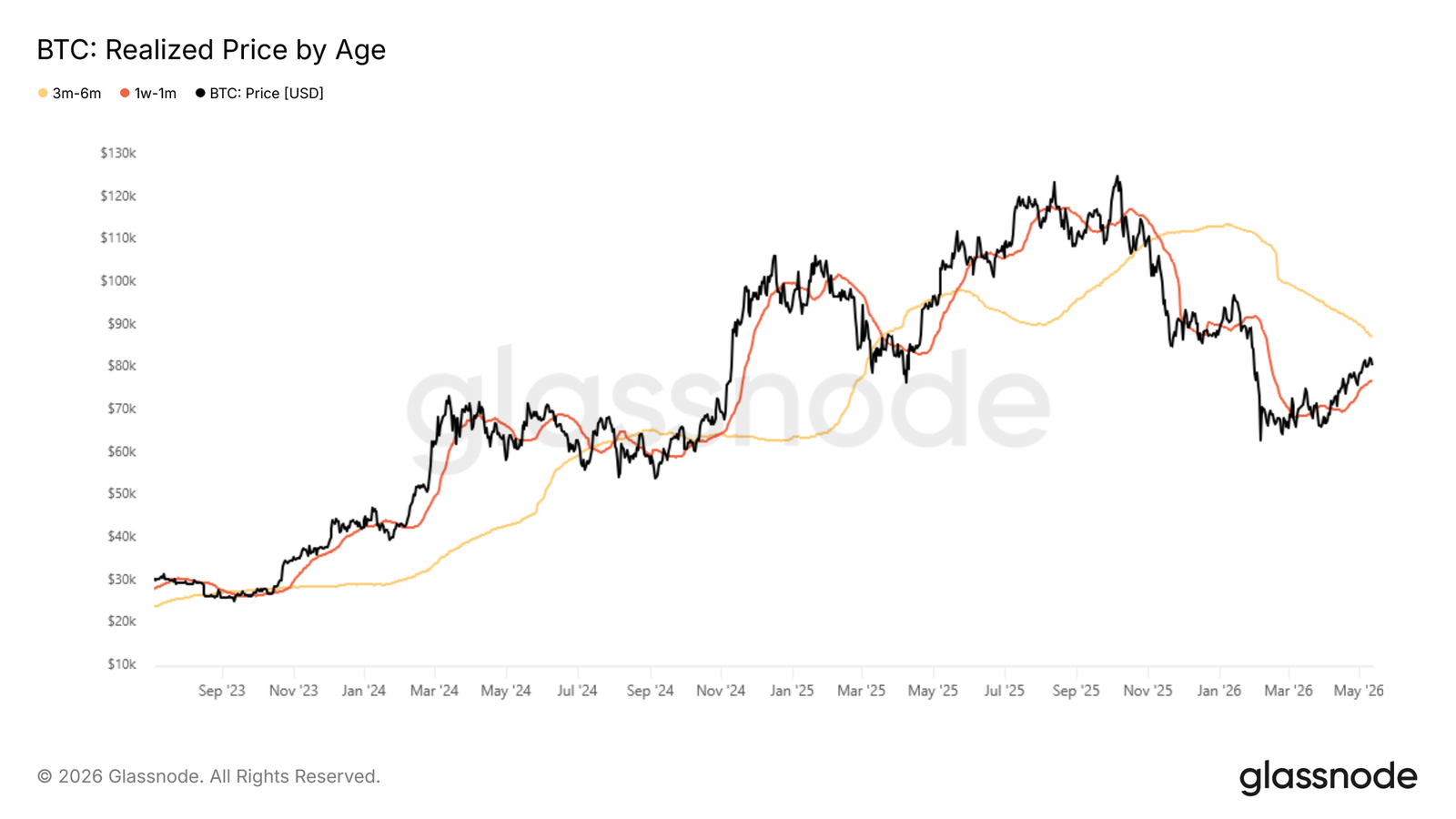
BTC realized price by age. Source: Glassnode
Short-term buyers continue to support the market around $76,900, which marks the average cost basis for coins acquired over the past 30 days. This indicates fresh demand is still entering the market at lower levels, even as overhead supply is concentrated closer to $87,000.
BTC futures traders stay cautious
Bitcoin researcher Axel Adler Jr. said that the buying activity across spot and futures markets has started to cool after Bitcoin’s recent push above $80,000. The 30-day net taker volume indicator rose to +2.0 on May 6 before dropping to +1.25 on Wednesday. The metric shows whether buyers or sellers are in control.
BTC buyer pressure has dropped roughly 35% from last week, showing traders are becoming less aggressive as Bitcoin trades near $80,000. Adler noted that past corrections in the +0.3 range often coincide with slower price action or sideways periods.
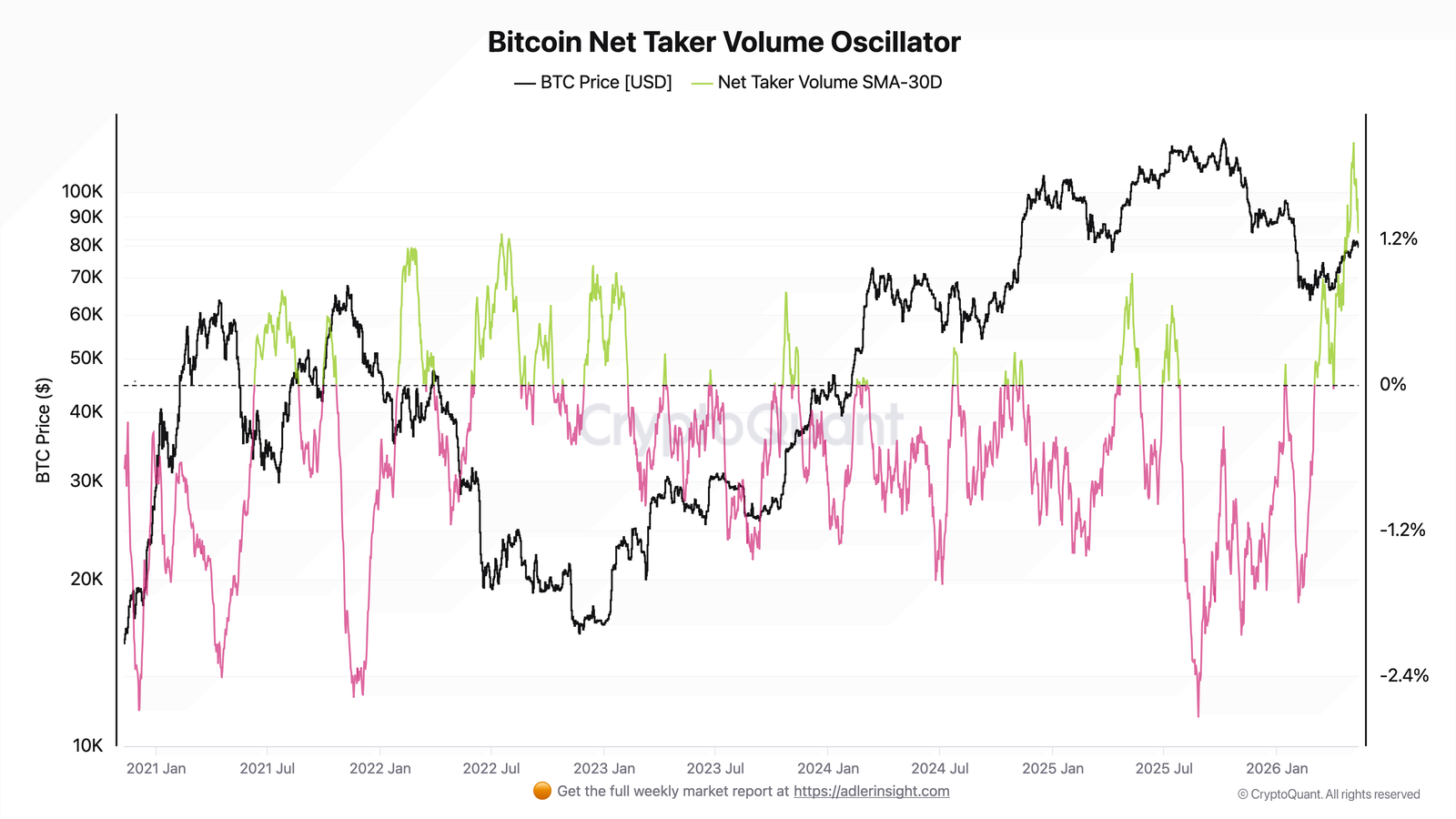
Bitcoin net taker volume oscillator. Source: Axel Adler Jr.
At the same time, the 30-day Bitcoin funding rate has remained negative since March. Negative funding means the short traders are paying long traders to keep their positions open, showing that bears still dominate futures activity.
Even with Bitcoin reclaiming the $80,000 range, BTC futures traders have not added long positions needed to support a decisive breakout. Adler said a move back above zero in funding rates would offer the first stronger sign of renewed bullish positioning.
Meanwhile, Alphractal CEO Joao Wedson said Bitcoin still needs stronger money flows before a larger bull market can begin. Wedson pointed to the Realized Cap Impulse metric, which tracks whether fresh capital is entering or leaving the Bitcoin market.
Bitcoin realized cap impulse. Source: Joao Wedson/X
The indicator remains slightly below zero, showing fresh capital inflows have not yet returned to the levels typically seen during stronger Bitcoin breakout phases. Wedson said a move back above zero would signal that investors are putting fresh capital back into Bitcoin.
Este artigo é produzido de acordo com a Política Editorial da Cointelegraph e destina-se apenas a fins informativos. Não constitui aconselhamento de investimento ou recomendações. Todos os investimentos e negociações envolvem riscos; os leitores são incentivados a realizar pesquisas independentes.
Mais sobre o assunto